Electric Car Charger Map UK: Find Charging Points Near You
A practical guide to electric car charger maps in the UK: how they work, where to find chargers near you, home vs public charging, typical costs, grants, and choosing the right setup.
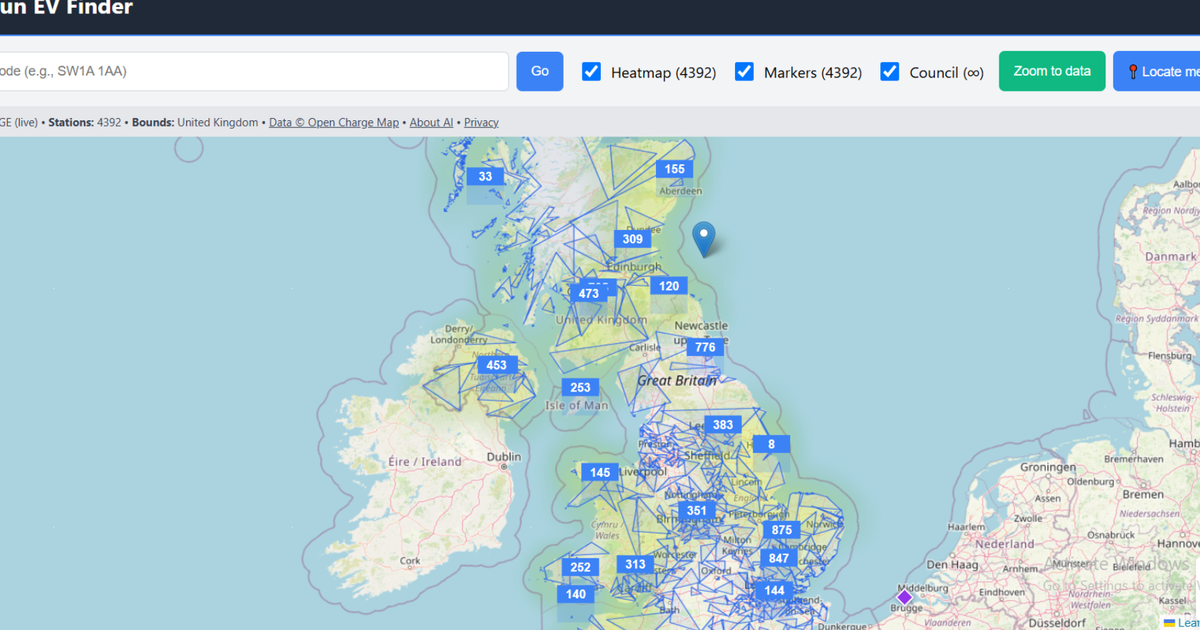
Finding a reliable electric car charger in the UK can feel confusing, especially when availability, charging speeds, and costs vary by location. Many drivers rely on electric car charger maps to quickly locate nearby charging points, plan journeys, and understand which options are available in their area. Alongside public charging, home charging has also become an important consideration for EV owners looking for convenience and lower running costs.
This guide explains how electric car charger maps work, where you can find chargers near you, and how public and home charging compare. It also covers typical costs, available support, and practical factors to consider when choosing a charging solution. If you want to check live chargers on a map, you can use Autodun EV Finder. For MOT-related checks, visit Autodun MOT Predictor.
Note: At Autodun, we analyse real charging-location data and user feedback to understand where coverage works well and where drivers still experience gaps. This guide reflects that practical perspective, not just headline claims.
What is an electric car charger map in the UK?
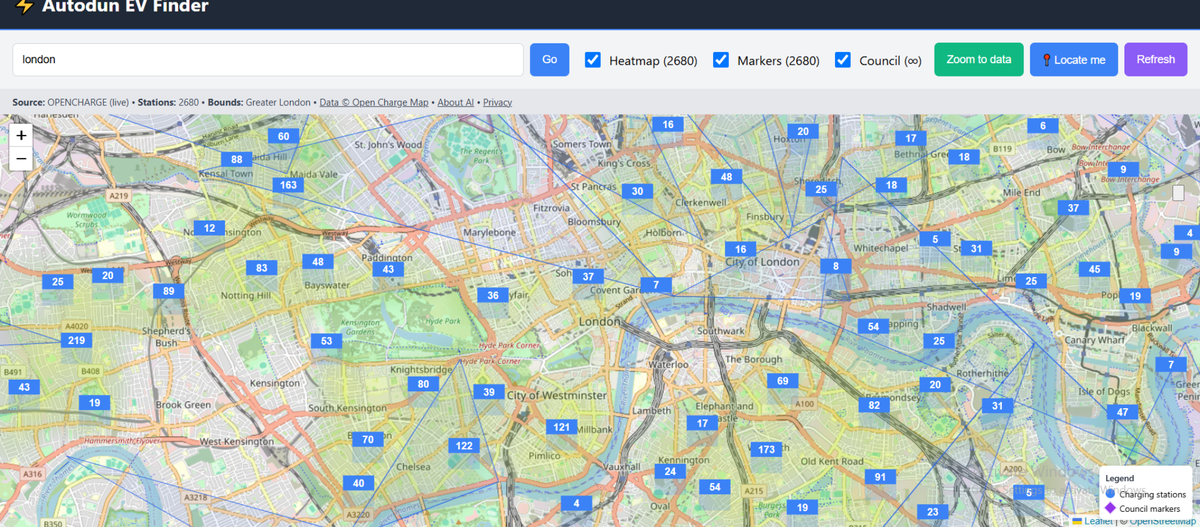
An electric car charger map in the UK is a digital map that shows where public electric vehicle charging points are located across the country. It allows drivers to quickly see nearby chargers, the types of connectors available, and whether a charging point is currently working. These maps are usually accessed through websites or mobile apps and are designed to make day-to-day charging simpler and more predictable.
Most electric car charger maps provide practical details such as charging speed, network operator, access rules, and whether payment is required. Some maps also display live availability, which helps drivers avoid turning up to a charger that is already in use. This can be especially useful in busy urban areas or along major motorway routes where chargers may be limited.
For UK drivers, a charger map is mainly used to plan journeys and understand local charging options. It also helps new electric car owners feel more confident about driving longer distances by showing that charging points are widely available. Instead of relying on guesswork, a charger map brings all the essential charging information together in one clear view.
How does an electric car charger map or app work?
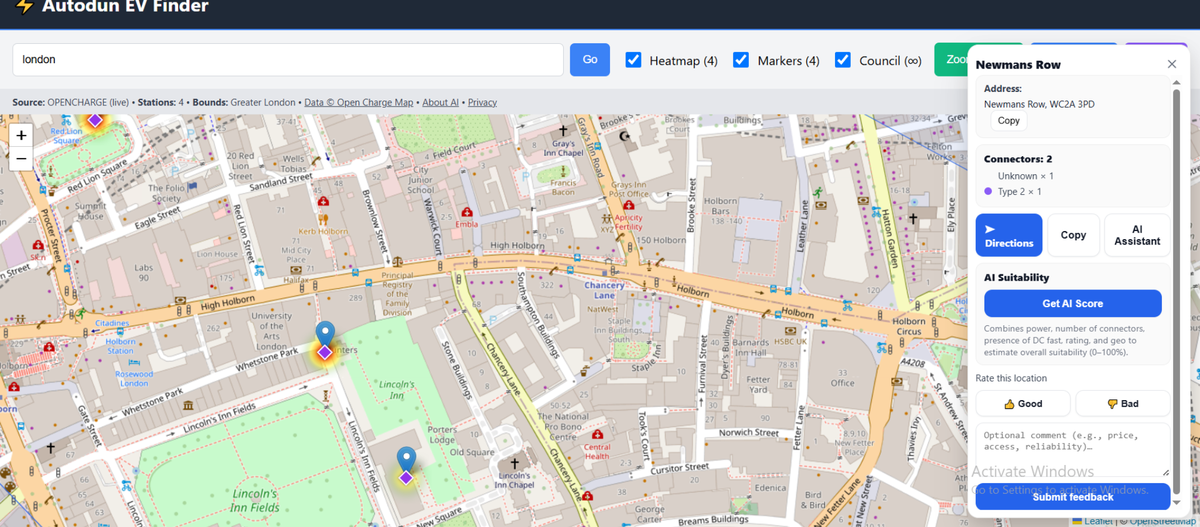
An electric car charger map or app works by using your location, or a postcode you enter, to display nearby public charging points on a map. Most apps collect charger location data from charging networks and public datasets, then present this information in a simple, searchable format. Drivers can usually apply filters to narrow results based on connector type, charging speed, or access requirements.
When selecting a specific charging point, the map typically shows practical details such as the exact location, network operator, charger type, and whether payment is required. Some apps also provide live status updates, indicating if a charger is available, in use, or temporarily out of service. The reliability of this information can vary depending on how frequently the data is updated by each charging network.
In everyday use, drivers rely on charger maps to check nearby options for routine charging and to plan longer journeys with more confidence. By viewing charging locations in advance, drivers can reduce uncertainty and avoid unnecessary detours. Overall, these maps are designed to make charging more predictable by showing what options are available before you arrive.
Where can I find electric car chargers near me in the UK?
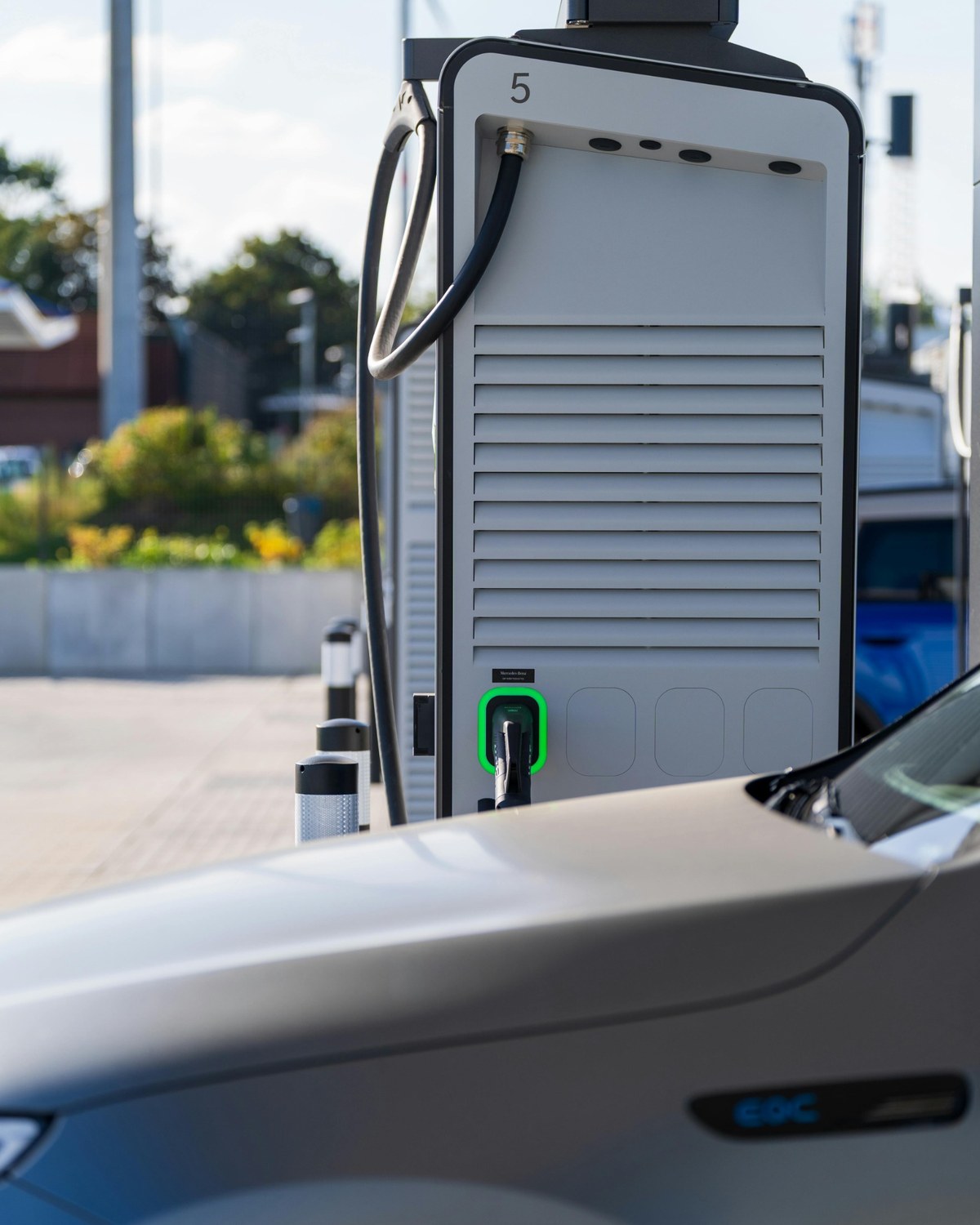
Electric car chargers are available in many everyday locations across the UK, making it easier for drivers to charge while travelling or during daily routines. Common public charging locations include supermarket car parks, shopping centres, public car parks, petrol stations, and motorway service areas. In some towns and cities, local councils have also installed on-street chargers, particularly in residential areas where home charging is not always possible.
Most drivers find nearby chargers by entering a postcode, town, or current location into an electric car charger map or app. This shows charging points within a chosen distance and provides useful information such as charging speed, access times, and whether the charger is open to the public. Some charging points are available at all hours, while others may only be accessible during site opening times.
Workplace and hotel chargers are becoming more common, although these are often limited to employees or guests. For drivers without a home charger, public charging locations are an important part of everyday charging. Checking a charger map in advance helps drivers choose the most convenient option and avoid unnecessary delays.
Home electric car chargers vs public charging points
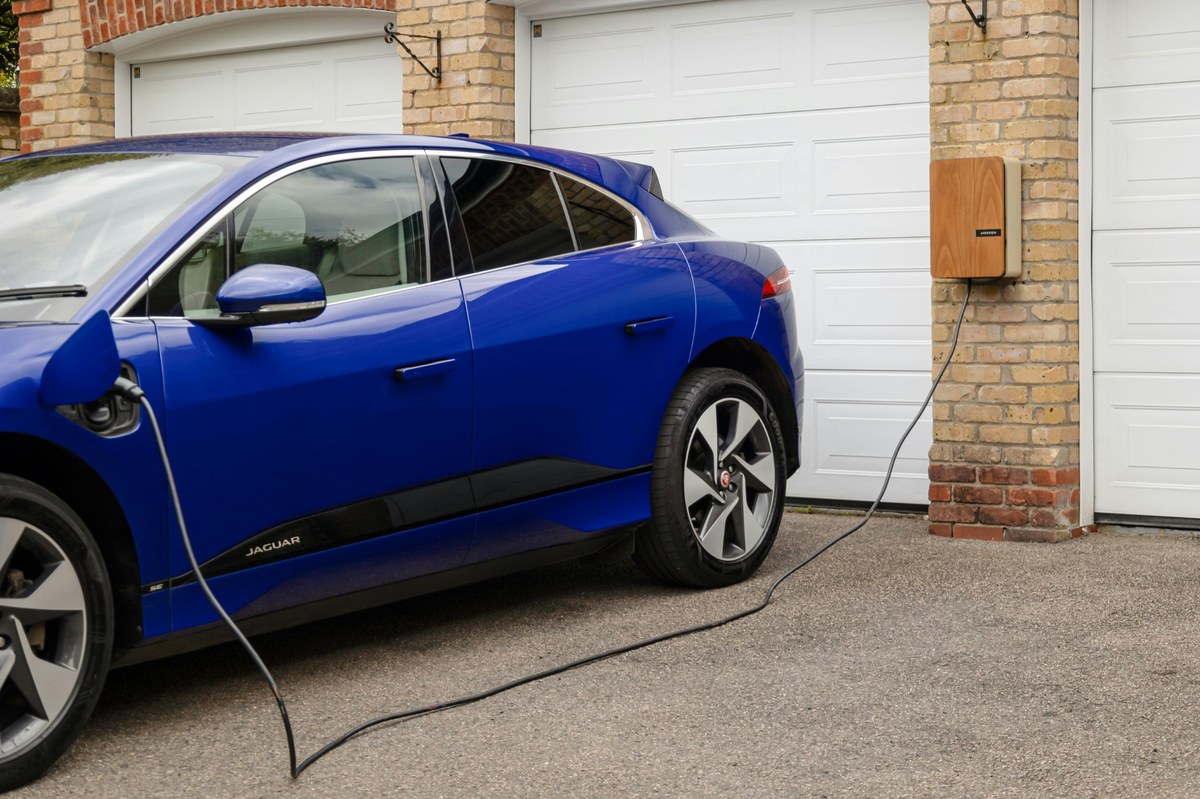
Home electric car chargers and public charging points meet different needs, and many UK drivers rely on a mix of both. A home charger is typically installed on a driveway or private parking space and allows the vehicle to charge overnight. This is often the most convenient option, as the car is ready to use each morning without needing to visit a public location. Charging at home is also usually cheaper per unit of electricity, particularly when using off-peak energy tariffs.
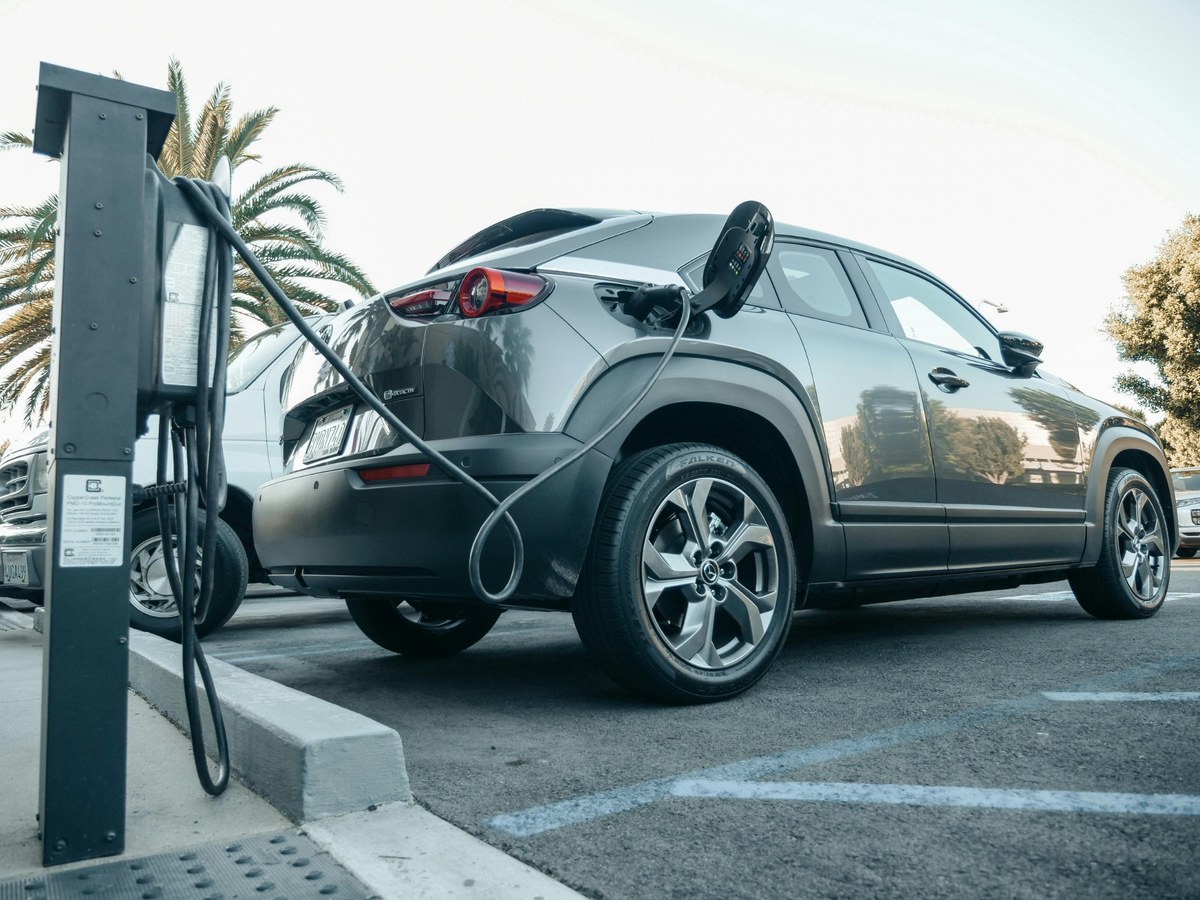
Public charging points are intended for use when drivers are away from home or do not have access to private parking. These chargers are commonly located in car parks, shopping areas, workplaces, and motorway service stations. Public chargers vary in speed, from slower units suited to longer stays to rapid chargers designed for shorter stops. Pricing and payment methods can differ depending on the charging network and location.
For drivers without a home charger, public charging is essential for everyday use. Even drivers with home charging still rely on public chargers for longer journeys or occasional top-ups. Understanding how home and public charging differ helps drivers choose the most practical option based on their driving habits and parking access.
How much does an electric car charger cost in the UK?
The cost of an electric car charger in the UK varies depending on whether you charge at home or use public charging points. For home charging, the overall cost usually includes the charger unit and installation. The charger itself typically costs a few hundred pounds, while installation costs can vary based on the property, existing wiring, and the distance from the electricity supply. In many cases, the total cost of installing a home charger falls within the low to mid four-figure range.
Ongoing home charging costs depend on electricity prices and how often the vehicle is charged. Many drivers reduce costs by charging overnight on off-peak tariffs, which can make home charging cheaper over time compared to regular public charging.
Public charging costs are less consistent. Some slower public chargers may still be free to use, although this is becoming less common. Most public chargers charge based on the amount of electricity used or the time spent charging. Rapid chargers usually cost more due to their higher power output, and prices can vary between networks and locations.
Are there electric car charger grants available in the UK?
In the UK, some drivers may be able to access financial support to help reduce the cost of installing a home electric car charger. These grants are usually targeted at specific situations, such as people living in flats, rented homes, or properties without private off-street parking. The rules around eligibility and funding levels can change, so it is important to check the latest guidance before arranging an installation.
Where available, grants typically contribute towards the installation cost rather than just the charger unit itself. This can be particularly helpful if additional electrical work is required. In most cases, applications are handled through approved installers, who assess eligibility and apply for the grant as part of the installation process.
Not all households qualify for support, and drivers with private driveways may not always be eligible depending on current criteria. Because grant schemes can change over time, drivers should always refer to official government information or speak directly with a certified installer to confirm what support is available.
Choosing the best electric car charger for your needs
Choosing the right electric car charger depends on how and where you usually charge your vehicle. For drivers installing a home charger, practical factors include available parking space, access to the electricity supply, and whether the charger will be installed indoors or outdoors. Charging speed is also important, as higher-power chargers can reduce charging time but may require additional electrical work.
Compatibility should always be checked before installation. While most modern electric cars support standard connector types, it is still important to ensure the charger matches your vehicle. Some chargers also offer smart features such as scheduled charging, energy monitoring, or the ability to take advantage of off-peak electricity tariffs, which may be useful for managing running costs.
For drivers who mainly use public charging, flexibility matters more than owning a specific charger. In these cases, understanding which connector types your vehicle supports and where compatible public chargers are commonly available is key. Rather than focusing on price alone, considering charging habits and future needs helps ensure the chosen solution remains practical over time.
Information in this guide is based on publicly available UK charging data, common industry standards, and user feedback. Availability, pricing, and grant eligibility can change, so it is sensible to confirm details before making decisions.
Frequently Asked Questions
Is there a free electric car charger map for the UK?
Yes, several electric car charger maps are available to use for free. These maps show public charging locations across the UK and often include basic details such as charger type and access. Some advanced features, like live availability, may vary depending on the data source.
Are electric car charger maps accurate?
Most charger maps are generally accurate, but information can sometimes be out of date. Availability and status depend on how often charging networks update their data. It is a good idea to check recent updates or have a backup option when planning longer journeys.
Can I rely on public chargers if I don’t have a home charger?
Many UK drivers rely entirely on public charging, especially in cities and flats. Public chargers can support day-to-day driving, but availability and cost vary by location. Planning ahead using a charger map is important to avoid delays.
Do electric car charger maps show charging costs?
Some charger maps show estimated prices or link to network pricing, but costs can change. Drivers should check pricing details within the charging network’s app or on-site signage before starting a charging session.
Do I need an app to use public electric car chargers?
Some public chargers can be used without an app, while others require registration with a charging network. Having access to more than one charging app can make public charging easier and more flexible.
Are all electric car chargers compatible with every vehicle?
Not all chargers are compatible with every electric car. Compatibility depends on connector type and charging speed. Checking vehicle requirements and charger details on a map helps avoid issues when arriving at a charging point.
Internal links: Explore live chargers on ev.autodun.com. For MOT checks, use mot.autodun.com.